

You are standing in front of your home in The Villages with a paint chip in one hand and a stain sample in the other, trying to figure out which one will actually hold up to central Florida’s humidity. The wrong answer is not just a cosmetic regret. It is paint that peels in three years, or stain that fades to gray before your next anniversary.
The painting vs staining exterior house decision matters more here than almost anywhere else in the country, because Florida’s damp air, intense UV, and storm season punish whichever finish gets it wrong. Pick the right one for your siding and climate and the finish holds for 7 to 10 years; pick the wrong one and you are repeating the job before your warranty expires.
This guide breaks down how each finish protects your home, how Florida’s climate changes the math, what each option really costs over a decade, and how to make the call for your specific home.
Key Takeaways
- Paint typically lasts 7 to 10 years in Florida but requires more prep and intensive repair when it fails.
- Stain allows wood to breathe and fades gradually, which makes touch-ups much easier.
- Stain costs less upfront per gallon but may need reapplication every 3 to 7 years on the Gulf Coast.
- Florida’s high humidity makes timing and product selection critical for both finishes.
- Your home’s existing finish and wood type should guide the decision more than aesthetics alone.
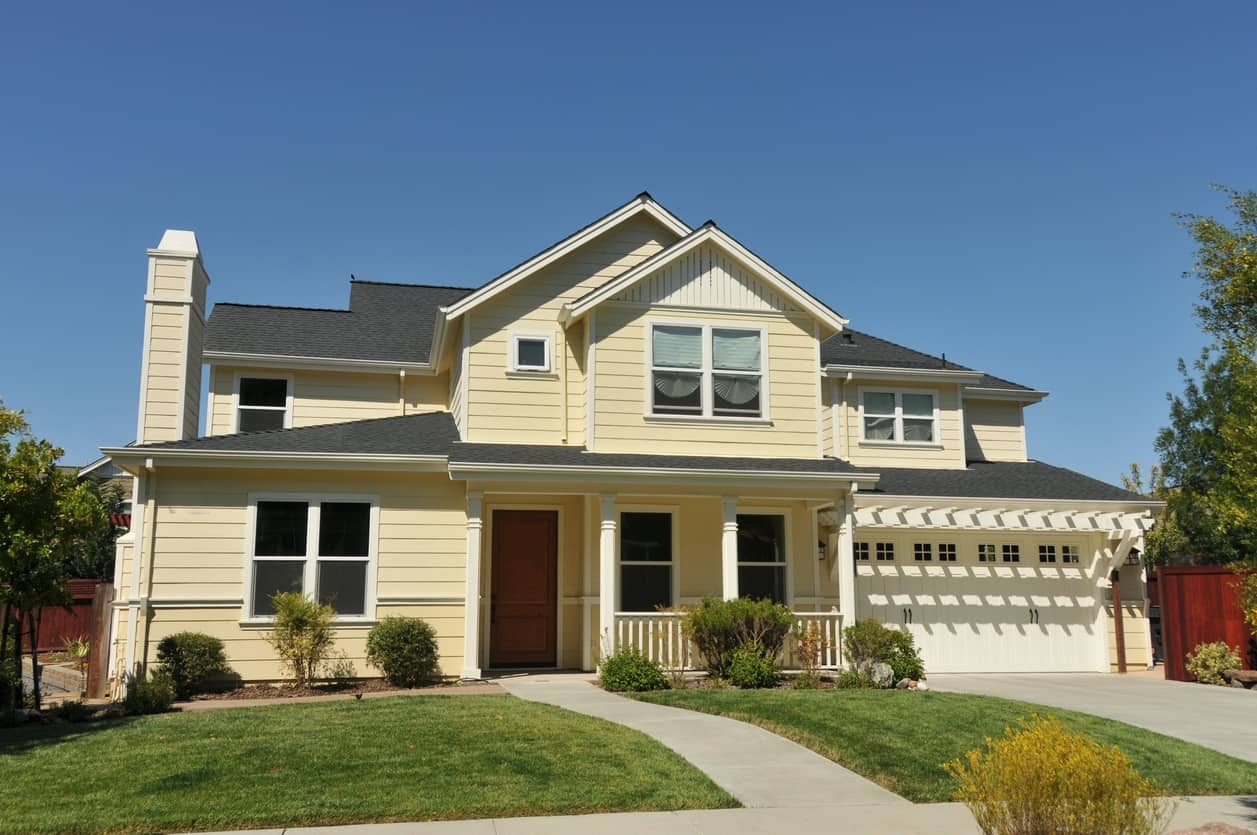
Painting vs Staining Exterior House: How Each Protects Your Home
The core difference between painting and staining your exterior is mechanical. Paint sits on top of the substrate. Stain seeps into it. That single distinction shapes everything about how each finish performs in central Florida.
Paint Forms a Surface Barrier
Paint creates a film over your wood that acts as a physical barrier against moisture, UV, and physical wear. Florida’s intense sun and frequent storms make that protective film valuable, when the prep underneath holds.
A quality exterior paint job lasts roughly 7 to 10 years on vertical siding when prep and product are matched correctly.
Stain Penetrates Into the Wood
Stain works differently. It soaks into the wood fibers and enhances the natural grain, rather than forming a film on top.
The breathing property matters in central Florida humidity. Stain lets moisture move through the wood instead of trapping it underneath a sealed film, which can reduce the risk of moisture-related failures on certain siding types.
The Climate Factor in Central Florida
The Villages sits squarely in humid subtropical climate territory, and that climate is the single biggest variable in how each finish performs.
What the Humidity Does
According to NOAA central Florida climate data, relative humidity in the region regularly sits above 70% and spikes past 80% through the summer. That humidity slows the curing process for both paint and stain.
Paint must release its solvents and cure into a hard film. High humidity slows that evaporation, leaving paint soft and prone to dust pickup or blistering. Pros in central Florida typically start very early and finish by mid-afternoon to avoid the worst of the humid hours.
Mildew and Algae Risk
Humid conditions create an ideal environment for mildew, mold, and algae on both finishes. They handle moisture differently when growth starts.
Paint’s film barrier can trap moisture if water gets behind it, which speeds the failure. Stain’s penetrating nature allows better moisture movement through the wood, but it can also let mildew embed deeper into the surface if not treated.
Durability and Longevity Comparison
The honest comparison between paint and stain depends on the product, the substrate, and the climate. Central Florida shortens both timelines compared to drier regions.
How Long Each Lasts on the Gulf Coast
Paint typically lasts 7 to 10 years on vertical siding in central Florida with proper prep and quality product. Solid stain lasts 5 to 7 years, while semi-transparent and transparent stains fade faster, often needing recoating every 3 to 5 years.
Florida’s humidity, UV, and storm season pull both timelines toward the lower end of national ranges.
How They Fail Differently
When paint fails, it peels. When stain fails, it fades. That single difference changes everything about how you maintain each one.
Paint failure means scraping, sanding, and re-priming the damaged areas before any new coat goes on. Stain failure usually just means cleaning the surface and recoating, which is faster and cheaper per touch-up.
Cost Differences: Upfront and Long-Term
The cost picture between paint and stain is more complicated than the per-gallon price on the can. Both initial cost and long-term maintenance need to be in the math.
The Per-Gallon Difference
Stain runs roughly $25 to $48 per gallon. Exterior house paint typically costs $30 to $70 per gallon. Paint also usually requires primer, which is an added material cost stain often does not need.
Labor is also lower for stain because it does not require priming and usually only takes one coat. Paint projects involve more prep, more masking, and at least two finish coats.
The 10-Year Math
The upfront savings on stain narrow over a decade. If paint lasts 9 years and stain lasts 4 years in central Florida, you may repaint once for every two stain jobs.
Run that calculation across material and labor and the long-term cost of the two finishes often lands close to even. The right question is rarely “which is cheaper today” and almost always “which fits this house and this owner over a decade.”
Application and Maintenance Requirements
Prep and ongoing care look meaningfully different between the two finishes, and that difference often decides the call for busy homeowners.
New Wood vs Previously Finished Wood
On new wood, solid stain has an advantage. It penetrates fresh wood better than paint and serves as its own primer, which simplifies the job.
Paint requires more preparation on previously painted surfaces. Old, dry, or flaky paint needs to be removed and the surface sanded smooth before a new coat goes on, which adds significant labor.
Maintenance Patterns Over Time
Stain is easier to refresh because there is no scraping required. Clean the surface, apply a fresh coat, and you are done. Reapplication typically happens every 2 to 5 years.
Paint goes longer between full repaints but requires more intensive work when it fails. A peeling section means scraping, sanding, priming, and repainting that area, not just rolling a new coat over the existing finish.
Appearance and Design Flexibility
Aesthetic goals are where the painting vs staining exterior house decision often gets made before the technical comparison even starts, and that is a mistake. Both options have a real place, but the look they produce is fundamentally different.
What Paint Offers
Paint provides unlimited color options and a range of sheens from flat to high-gloss. If you want to completely change your home’s appearance, hide wood imperfections, or match a specific HOA palette, paint is the more flexible tool.
It also creates a more uniform, refined look that suits traditional Florida home styles.
What Stain Offers
Stain enhances the natural beauty of wood instead of covering it. Semi-transparent stains show grain and color variation through the finish.
The trade-off is that semi-transparent stain typically needs restaining every 2 to 3 years to keep its color. For homes in The Villages featuring natural wood siding, the choice often comes down to whether you want to showcase the grain or create a more uniform look.
Making the Right Choice for Your Home
Four factors decide painting versus staining for most central Florida homes, and they almost always outweigh aesthetic preference.
Start With the Existing Finish
If your siding is currently painted, continuing with paint usually makes sense. If your home was previously stained, stick with stain.
Switching between finishes typically requires complete removal of the existing coating, which adds significant cost and time.
Match the Wood Type
Cedar siding often performs better with stain because it allows the wood to breathe and ages gracefully. Painted trim on a stained body works fine, but a full conversion from one to the other is a bigger project than most homeowners expect.
For brick and masonry exteriors specifically, see our painting exterior brick homes guide for the right approach.
Consider Your Maintenance Style
If you prefer less frequent but more intensive maintenance, paint suits you better. If you accept more frequent but easier touch-ups, stain is the better fit.
For homes near water or in particularly humid microclimates within The Villages, stain’s breathing properties may offer real long-term advantages for wood health.
Your home is the biggest visible asset on your lot, and Florida’s climate does not forgive a wrong call on finish. Whether you want an honest assessment of which finish your specific siding needs, advice on timing the job around storm season, or a full professional application that holds up to central Florida’s humidity, our team at Premium Painting will walk you through exactly what your home needs.
Call 352-660-7820 for a FREE estimate today.