
If you are wondering how to paint over wallpaper, you are not alone. Many homes in Beverly Hills, FL still have older wallpaper that no longer fits the space. Painting over it can work, but only when the conditions are right and the process is handled correctly. When it is rushed or done without proper prep, problems show up fast.
This guide breaks down when painting over wallpaper makes sense, when it does not, and what actually needs to happen before paint ever touches the wall.
Key Takeaways:
- Painting over wallpaper works only when the paper is clean, tight, and free from moisture damage.
- Strong surface prep and proper sealing primer prevent bubbling, peeling, and stain bleed-through.
- Seam repair and light sanding are required to keep overlaps from showing through the paint.
- Moisture-heavy rooms need extra care due to a higher risk of adhesion failure.
- A professional evaluation helps avoid costly repainting caused by hidden wallpaper issues.
When Painting Over Wallpaper Is A Good Option
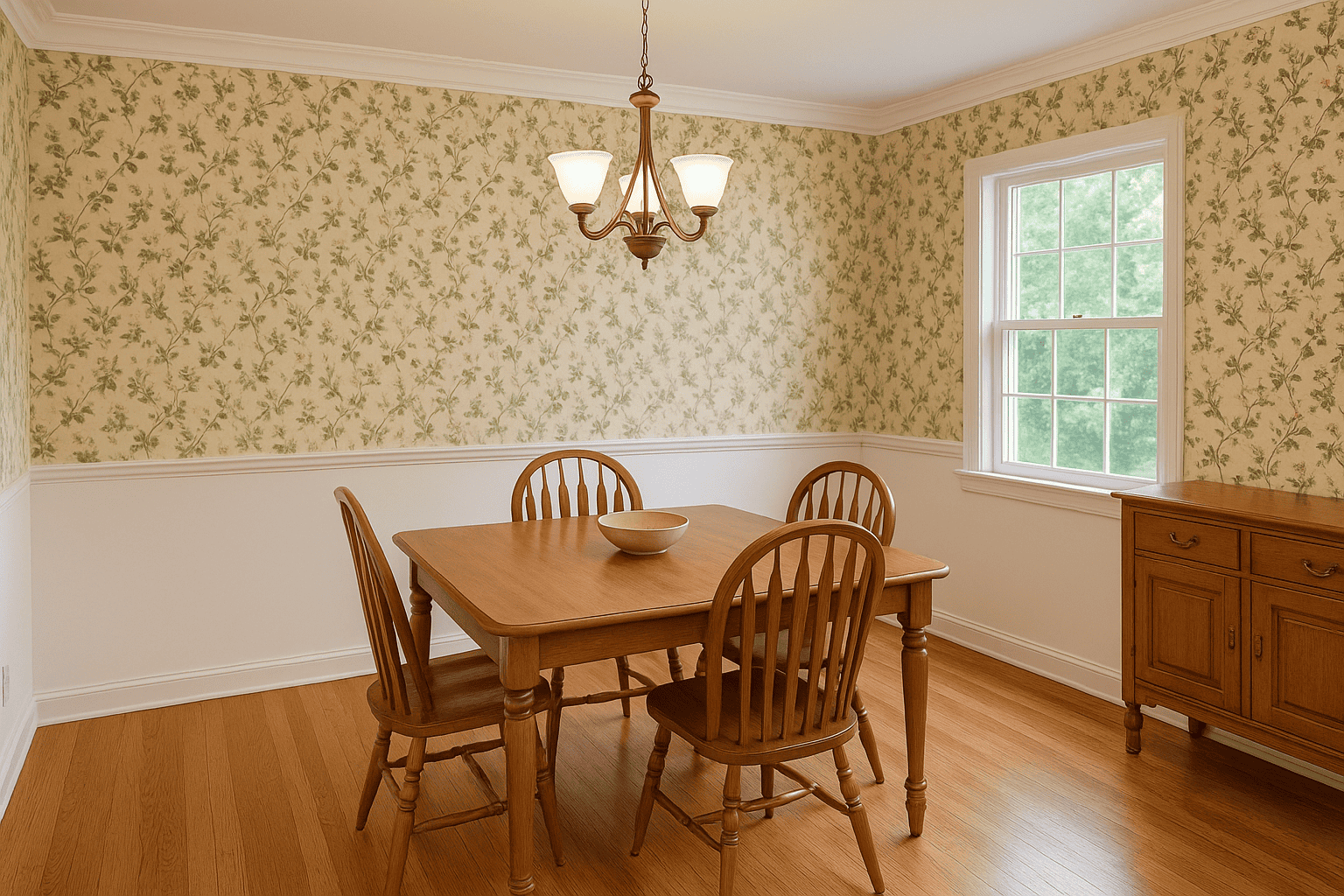
Yes, painting over wallpaper is possible. The wallpaper must be clean, tightly bonded, and free from moisture damage. Paint cannot fix loose seams, trapped mildew, or failing adhesive.
Wallpaper that is peeling in large areas, heavily stained, or damaged by water is not a good candidate. Painting over those surfaces often leads to bubbling, peeling, or visible defects later.
Paper-backed vinyl wallpaper in good condition is usually the best surface for interior painting.
Painting over wallpaper is usually appropriate when:
- The wallpaper is firmly attached to the wall
- There is no mildew or moisture staining
- Seams are tight and not curling
- The surface is mostly smooth
- The room is not exposed to constant humidity
If the wallpaper is lifting in multiple places, heavily textured, or fabric-backed, painting over it can create more work in the long run.
How To Paint Over Wallpaper
1: Surface Preparation Comes First
Preparation determines how well paint bonds and how smooth the final finish looks. Before any primer or paint is applied, the space is cleared and protected. Outlet covers, fixtures, and trim areas are secured.
Walls are cleaned to remove dust, grease, and residue. Any loose wallpaper edges are trimmed. Small damaged areas are filled with drywall compound and smoothed.
This stage connects closely with proper room prep. If you are planning a full interior project, how to prep a room for painting fits naturally into this phase of the process.
2: Why Sealing With Primer Is Required
Primer acts as the barrier between the wallpaper and the paint. Without proper sealing, moisture from paint can loosen the wallpaper adhesive and cause failure later.
Oil-based or shellac-based primer is commonly used because it does not soften the wallpaper glue. One coat seals the surface. A second coat is often added after seam repairs to create uniform adhesion.
This step is also where previous stains and patched areas are fully locked in before the finish coats go on.
3: Treating Wallpaper Seams And Repairs
Wallpaper seams remain one of the most noticeable problem areas if not handled correctly. After the first primer coat dries, seams are reinforced with fiberglass joint tape. A thin skim coat smooths the transition.
Once dry, seams are lightly sanded to level the surface. Dust is removed before additional primer or paint is applied.
If this step is skipped, seams often remain visible through multiple coats of paint.
4: Choosing The Right Paint And Finish
After sealing is complete, latex paint or acrylic paint can be applied over the primed surface.
Finish selection depends on the room:
- Eggshell works well for most living areas
- Satin offers slightly more cleanability
- Semi-gloss is better for moisture-prone spaces
Color behavior can shift based on the surface underneath and lighting. If you have ever questioned how final color settles, does paint dry darker or lighter ties into this stage of the project.
Two even coats are standard for proper coverage and durability.
4: Areas Where Extra Caution Is Needed
Bathrooms, laundry rooms, and kitchens carry more moisture than other spaces. These rooms place higher stress on painted wallpaper surfaces. Any existing mildew, water marks, or peeling seams must be corrected before painting begins.
Bedrooms, living rooms, and hallways usually provide the most stable conditions for painting over wallpaper.
5: Problems That Happen When Steps Are Skipped
Common issues tied to rushed wallpaper painting include:
- Seams showing through finished paint
- Bubbling weeks after completion
- Peeling around trim and outlets
- Stains bleeding through the surface
- Uneven wall texture
These problems almost always trace back to skipped cleaning, poor sealing, or inadequate seam repair. Many of these issues are also covered in more detail within painting mistakes that affect long-term results.
6: How Long Does the Process Typically Take
Painting over wallpaper is not a single-day project when done correctly. Prep, drying time, seam work, and multiple coats spread the work across several days.
Dry time depends on humidity, temperature, and the type of products used. Rushing from one step to the next often leads to surface failure later.
7: How Expert Painters In Beverly Hills, FL Approach Wallpaper Painting
Professional evaluation always comes first. The condition of the wallpaper, the drywall underneath, and room moisture levels all influence the plan.
The Premium Painting process includes:
- Full surface inspection
- Protection of floors, windows, and fixtures
- Cleaning and bonding repairs
- Sealing with proper primer
- Seam taping and skim coating
- Precision sanding
- Final paint application
- Detailed cleanup and walkthrough
This method allows expert painters in Beverly Hills, FL to deliver smooth, lasting finishes even when wallpaper is part of the surface.
Final Thoughts On How To Paint Over Wallpaper
Knowing how to paint over wallpaper starts with understanding the condition of the wall and the steps required to stabilize it. Strong preparation, proper sealing, and careful seam treatment protect the finish long term.
Cutting corners often leads to peeling, bubbling, and visible flaws. With the right process in place, painting over wallpaper can refresh a space without full removal.
If you are located in Lecanto, Belleview, Silver Springs, or the surrounding areas, Premium Painting can evaluate your walls and outline the best path forward. Call us at 352-660-7820 for your FREE estimate and a clear plan for your home.